Showing posts with label Facts. Show all posts

Sunday, August 9, 2009

Do you know about facebook?


Facebook was originally named TheFaceBook and it was developed
by Harvard student Mark Zuckerberg. The first use of the
FaceBook was on the Harvard campus and it was limited
only to Harvard students. Soon the FaceBook spread like
wild fire around the other major U.S. Universities. Mark Zuckerberg
dropped the Harvard and pursued his facebook dream to become
one of the 4th most-trafficked websites in the world with more
than 90 million active users. The FaceBook website is built on PHP-MySQL
technology and it is probably the most popular PHP website ever built.
Interesting fact is that the facebook.com domain was purchased for $200,000
and FaceBook has more than 24 million photos uploaded daily.

Wednesday, July 15, 2009

20 Interesting and Useful Water Facts

  1. Roughly 70 percent of an adult’s body is made up of water.
  2. At birth, water accounts for approximately 80 percent of an infant’s body weight.
  3. A healthy person can drink about three gallons (48 cups) of water per day.
  4. Drinking too much water too quickly can lead to water intoxication. Water intoxication occurs when water dilutes the sodium level in the bloodstream and causes an imbalance of water in the brain.
  5. Water intoxication is most likely to occur during periods of intense athletic performance.
  6. While the daily recommended amount of water is eight cups per day, not all of this water must be consumed in the liquid form. Nearly every food or drink item provides some water to the body.
  7. Soft drinks, coffee, and tea, while made up almost entirely of water, also contain caffeine. Caffeine can act as a mild diuretic, preventing water from traveling to necessary locations in the body.
  8. Pure water (solely hydrogen and oxygen atoms) has a neutral pH of 7, which is neither acidic nor basic.
  9. Water dissolves more substances than any other liquid. Wherever it travels, water carries chemicals, minerals, and nutrients with it.
  10. Somewhere between 70 and 75 percent of the earth’s surface is covered with water.
  11. Much more fresh water is stored under the ground in aquifers than on the earth’s surface.
  12. The earth is a closed system, similar to a terrarium, meaning that it rarely loses or gains extra matter. The same water that existed on the earth millions of years ago is still present today.
  13. The total amount of water on the earth is about 326 million cubic miles of water.
  14. Of all the water on the earth, humans can used only about three tenths of a percent of this water. Such usable water is found in groundwater aquifers, rivers, and freshwater lakes.
  15. The United States uses about 346,000 million gallons of fresh water every day.
  16. The United States uses nearly 80 percent of its water for irrigation and thermoelectric power.
  17. The average person in the United States uses anywhere from 80-100 gallons of water per day. Flushing the toilet actually takes up the largest amount of this water.
  18. Approximately 85 percent of U.S. residents receive their water from public water facilities. The remaining 15 percent supply their own water from private wells or other sources.
  19. By the time a person feels thirsty, his or her body has lost over 1 percent of its total water amount.
  20. The weight a person loses directly after intense physical activity is weight from water, not fat.

Friday, July 10, 2009

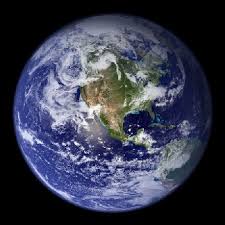
Earth Facts


Age:
4.6 billion years old.

Location: 3rd planet from the sun.

Size: 5th largest planet in our solar system.

Surface Area: 197 million square miles, about 70 percent of the Earth's surface is covered with water..

Diameter: The Earth has an average diameter of 12,742 kilometers. (7,926 miles)

Average Temperature: The temperature at the Earth's core is estimated to be between 5000 and 7000 degrees Celsius.

Length of Year: 365.25 days

Inclination of Axis: The Earth's axis has a tilt of about 23 ½ degrees. It is this tilt which causes the seasons.

Chemical Composition: The Earth is made mostly of iron, oxygen, silicon, magnesium, nickel and sulfur: 34.6% Iron, 29.5% Oxygen, 15.2% Silicon, 12.7% Magnesium, 2.4% Nickel, 1.9% Sulfur, 0.05% Titanium


1. What is the hottest place on Earth?

Count one wrong if you guessed Death Valley in California. True enough on many days. But El Azizia in Libya recorded a temperature of 136 degrees Fahrenheit (57.8 Celsius) on Sept. 13, 1922 -- the hottest ever measured. In Death Valley, it got up to 134 Fahrenheit on July 10, 1913.

2. And the coldest place around here?

Far and away, the coldest temperature ever measured on Earth was -129 Fahrenheit (-89 Celsius) at Vostok, Antarctica, on July 21, 1983.

3. What makes thunder?


If you thought, "Lightning!" then hats off to you. But I had a more illuminating answer in mind. The air around a lightning bolt is superheated to about five times the temperature of the Sun. This sudden heating causes the air to expand faster than the speed of sound, which compresses the air and forms a shock wave; we hear it as thunder.

4. Can rocks float?

In a volcanic eruption, the violent separation of gas from lava produces a "frothy" rock called pumice, loaded with gas bubbles. Some of it can float, geologists say. I've never seen this happen, and I'm thankful for that.

5. Can rocks grow?

Yes, but observing the process is less interesting than watching paint dry. Rocks called iron-manganese crusts grow on mountains under the sea. The crusts precipitate material slowly from seawater, growing about 1 millimeter every million years. Your fingernails grow about the same amount every two weeks.

6. How much space dust falls to Earth each year?

Estimates vary, but the USGS says at least 1,000 million grams, or roughly 1,000 tons of material enters the atmosphere every year and makes its way to Earths surface. One group of scientists claims microbes rain down from space, too, and that extraterrestrial organisms are responsible for flu epidemics. There's been no proof of this, and I'm not holding my breath.

7. How far does regular dust blow in the wind?

A 1999 study showed that African dust finds its way to Florida and can help push parts of the state over the prescribed air quality limit for particulate matter set by the U.S. Environmental Protection Agency. The dust is kicked up by high winds in North Africa and carried as high as 20,000 feet (6,100 meters), where it's caught up in the trade winds and carried across the sea. Dust from China makes its way to North America, too.

8. Where is the worlds highest waterfall?

The water of Angel Falls in Venezuela drops 3,212 feet (979 meters).

9. What two great American cities are destined to merge?

The San Andreas fault, which runs north-south, is slipping at a rate of about 2 inches (5 centimeters) per year, causing Los Angeles to move towards San Francisco. Scientists forecast LA will be a suburb of the City by the Bay in about 15 million years.

10. Is Earth a sphere?

Because the planet rotates and is more flexible than you might imagine, it bulges at the midsection, creating a sort of pumpkin shape. The bulge was lessening for centuries but now, suddenly, it is growing, a recent study showed. Accelerated melting of Earth's glaciers is taking the blame for the gain in equatorial girth.


Monday, June 29, 2009

Top 10 Amazing Facts About Your Body Odor


  1. Sweat Does Not Smell

    Body odor does not come from sweat itself because sweat is odorless. Your body produces two types of sweat: the eccrine sweat and apocrine sweat. The eccrine sweat represents a clear sweat, consisting mostly of water that does not smell and plays an important role in regulating our body temperature. The apocrine sweat that is produced by the glands is thicker and is located mainly near hair follicles, on the groin area, in the armpits and on the scalp. When bacteria contacts with apocrine sweat on the surface of the skin, the release of chemicals produces your body odor.


  2. Your Body Odor May Indicate a Health Problem

    Everyone has its individual body odor, but some types of smell may reveal certain health problems. It is known that if your sweat smells like bleach, it may indicate a kidney or liver disease, while fruity body odor often points to diabetes. Also a rare genetic disorder, called trimethylaminuria, makes a person produce fish-like body odor.


  3. Men's Body Odor is a Turn-on for Women

    Researchers at the University of California, Berkeley, discovered that a compound found in male sweat can cause a number of emotional and physiological changes in women. The male chemical androstadienone in sweat was found to regulate menstrual cycle and increase the release of luteinizing hormone, which plays an important role in stimulating ovulation. The male underarm odor also activates certain brain areas, improving woman's mood and sexual arousal.


  4. Men and Women Choose Partners by Odor

    If you do not like your new partner's body odor, you may think twice before having long-term relationships with him or her. Scientists say that body odor is a significant factor in human sexual attraction. Men and women choose partners through their body odor and are attracted to partners with a different immune system to their own. This probably has an evolutionary benefit of maintaining diverse immune system for their children.


  5. Your Body Odor Tells About Your Diet

    Spicy foods like garlic, onion, curry and cumin contain compounds that can remain in sweat. If you ate large amount of these foods, the strong body odor they give can persist up to 24 hours after eating them.


  6. Women Smell like Onions while Men Smell like Cheese

    A curious study conducted by researchers at Firmenich, a company in Geneva revealed that women's body odor contained high levels of sulphur compound, which together with bacteria, feeding on sweat, produces chemical compound thiol that has a smell of onion. According to their findings, men's sweat was found to contain high levels of fatty acid, which when mixed with bacteria from the underarm, produces the smell, resembling cheese.


  7. Asian People Produce Less Body Odor

    Excessive sweating is a more common problem for Caucasians and Africans, who tend to have more hair follicles, where apocrine glands come from. East Asian people appear to have less and smaller apocrine glands, which explains why they might not need to use deodorants as often as populations of Africa and Europe.


  8. Your Body Odor is Unique as Fingerprint

    Your body produces one of its kind odor, irrespective of what you eat. Individual odortypes are genetically determined odors of each person, containing volatile organic compounds (VOCs) that give you an odor different from others, just like fingerprints or DNA sample. Scientists are working at creating special devices to identify individual odortypes to find criminals, terrorists or missing children.


  9. Kids Do Not Stink

    Smelly armpits are not a problem for kids. Normally children do not need to mask their body odor until puberty. The pungent body odor appears when a child enters adolescence between the ages 8 to 14 years. During puberty, the androgen hormones activate sweat glands, leading to production of body odor.


  10. Women Detect Body Odors Better than Men

    Women are better at recognizing body odors and appear to identify differences in odor quality. Scientists from the Monell Center say that it is easy for women to sniff out underarm odor even if it is masked with antiperspirants. Researchers claim that women's sensitivity to body odor is explained by its biological importance.

Facts about Farts

Where does fart gas come from?

The gas in our intestines comes from several sources: air we swallow, gas seeping into our intestines from our blood, gas produced by chemical reactions in our guts, and gas produced by bacteria living in our guts.

What is fart gas made of?

The composition of fart gas is highly variable.
Most of the air we swallow, especially the oxygen component, is absorbed by the body before the gas gets into the intestines. By the time the air reaches the large intestine, most of what is left is nitrogen. Chemical reactions between stomach acid and intestinal fluids may produce carbon dioxide, which is also a component of air and a product of bacterial action. Bacteria also produce hydrogen and methane.
But the relative proportions of these gases that emerge from our anal opening depend on several factors: what we ate, how much air we swallowed, what kinds of bacteria we have in our intestines, and how long we hold in the fart.
The longer a fart is held in, the larger the proportion of inert nitrogen it contains, because the other gases tend to be absorbed into the bloodstream through the walls of the intestine.
A nervous person who swallows a lot of air and who moves stuff through his digestive system rapidly may have a lot of oxygen in his farts, because his body didn't have time to absorb the oxygen.
According to Dr. James L. A. Roth, the author of Gastrointestinal Gas (Ch. 17 in Gastroenterology, v. 4, 1976) most people (2/3 of adults) pass farts that contain no methane. If both parents are methane producers, their children have a 95% chance of being producers as well. The reason for this is apparently unknown. Some researchers suspect a genetic influence, whereas others think the ability is due to environmental factors. However, all methane in any farts comes from bacterial action and not from human cells.

What makes farts stink?

The odor of farts comes from small amounts of hydrogen sulfide gas and mercaptans in the mixture. These compounds contain sulfur. Nitrogen-rich compounds such as skatole and indole also add to the stench of farts. The more sulfur-rich your diet, the more sulfides and mercaptans will be produced by the bacteria in your guts, and the more your farts will stink. Foods such as cauliflower, eggs and meat are notorious for producing smelly farts, whereas beans produce large amounts of not particularly stinky farts.

Why do farts make noise?

The sounds are produced by vibrations of the anal opening. Sounds depend on the velocity of expulsion of the gas and the tightness of the sphincter muscles of the anus. Contrary to a popular misconception, fart noise is not generated by the flapping of the butt cheeks. You can see proof of this in the close-up video footage of Carl Plant's fart on Mate-in-a-State .

Why are stinky farts generally warmer and quieter than regular farts?

(Question submitted by many, many people!)

Most fart gas comes from swallowed air and consists largely of nitrogen and carbon dioxide, the oxygen having been absorbed by the time it reaches the anal opening. These gases are odorless, although they often pick up other (and more odiferous) components on the way through the bowel. They emerge from the anus in fairly large bubbles at body temperature. A person can often achieve a good sound with these voluminous farts, but they are commonly (but not always!) mundane with respect to odor, and don't feel particularly warm.
Another major source of fart gas is bacterial action. Bacterial fermentation and digestion processes produce heat as a byproduct as well as various pungent gases. The resulting bubbles of gas tend to be small, hot, and concentrated with stinky bacterial metabolic products. These emerge as the notorious, warm, SBD (Silent-But-Deadly), often in amounts too small to produce a good sound, but excelling in stench.

How much gas does a normal person pass per day?

On average, a person produces about half a liter of fart gas per day, distributed over an average of about fourteen daily farts.
Whereas it may be difficult for you to determine your daily flatus volume, you can certainly keep track of your daily numerical fart count. You might try this as a science fair project: Keep a journal of everything you eat and a count of your farts. You might make a note of the potency of their odor as well. See if you can discover a relationship between what you eat, how much you fart, and how much they smell.

Thursday, June 25, 2009

Did you know......... some interesting facts


A zebra is white with black stripes.

All the planets in our solar system rotate anticlockwise, except Venus. It is the only planet that rotates clockwise.

Hummingbirds are the only animal that can also fly backwards.

Insects do not make noises with their voices. The noise of bees, mosquitoes and other buzzing insects is caused by rapidly moving their wings.

The cockroach is the fastest animal on 6 legs covering a meter a second.

The word "listen" contains the same letters as the word "silent".

The only 2 animals that can see behind itself without turning it's head are the rabbit and the parrot.

A 'jiffy' is an actual unit of time for 1/100th of a second.

India invented the Number System. Zero was invented by Aryabhatta.

The whip makes a cracking sound because its tip moves faster than the speed of sound.

A hippopotamus can run faster than a man.

India never invaded any country in her last 10000 years of history.

'Hippopotomonstrosesquippedaliophobia' is the fear of long words.

Didaskaleinophobia is the fear of going to school.

Phobatrivaphobia is a fear of trivia about phobias !!

It is impossible to lick your elbow. ( We know you gonna try this !!! )

A snail can sleep for 3 years. ( wow, lucky chap eh ? )

The names of the continents all end with the same letter with which they start

In 1883 the explosion of the volcano Krakatoa put so much dust into the earth's atmosphere that sunsets appeared green and the moon appeared blue around the world for almost two years.

"Almost" is the longest word in the English language with all the letters in alphabetical order.

Twenty-Four-Karat Gold is not pure gold since there is a small amount of copper in it. Absolutely pure gold is so soft that it can be molded with the hands.

Electricity doesn't move through a wire but through a field around the wire.

Do you know the names of the three wise monkeys? They are: Mizaru (See no evil), Mikazaru (Hear no evil), and Mazaru (Say no evil ).

55 per cent of people yawn within 5 minutes of seeing someone else yawn. Reading about yawning makes most people yawn. hello, zzzzz zzzz ?